Enhancing the well-being of high school students through comprehensive reproductive health education
DOI:
https://doi.org/10.22219/jcse.v6i1.35361Keywords:
Adolescent, Counseling, Health Education, High School Students, Reproductive HealthAbstract
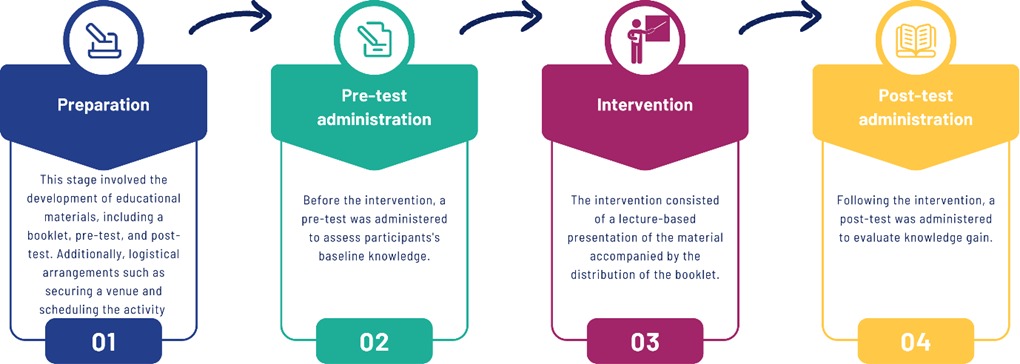
This activity aimed to enhance high school students' knowledge of reproductive health through counseling using lectures and booklet distribution. The program was conducted at a high school in Malang City, involving 45 eleventh-grade students. The methods used included a pre-test, lecture, booklet distribution, and a post-test. The analysis results showed a significant increase in students' knowledge of reproductive health after the intervention, with the pre-test score rising from 24.13±1.74 to a post-test score of 28.64±0.77 (p=0.000). This counseling session successfully raised adolescents' awareness and knowledge of reproductive health, helping prevent issues such as sexually transmitted infections and early pregnancies. The use of booklets proved to be an effective medium for delivering accurate and comprehensive information on reproductive health.
Downloads
References
Afifah, M., Maretta, A., Kusumaning, A., & Sosroatmodjo, B. (2021). Problematika remaja sebagai generasi penerus bangsa. Seminar Nasional Pengabdian Masyarakat, 37–40. https://jurnal.umj.ac.id/index.php/semnaskat/article/view/10775%0Ahttps://jurnal.umj.ac.id/index.php/semnaskat/article/download/10775/6073
Ahmad, F., & Karim, M. (2019). Impacts of knowledge sharing: a review and directions for future research. Journal of Workplace Learning, 31(3), 207–230. https://doi.org/10.1108/JWL-07-2018-0096
Badan Pusat Statistik. (2023). Jumlah penduduk pertengahan tahun (ribu jiwa), 2022-2023. https://www.bps.go.id/id/statistics-table/2/MTk3NSMy/jumlah-penduduk-pertengahan-tahun--ribu-jiwa-.html.
Bearak, J., Popinchalk, A., Ganatra, B., Moller, A.-B., Tunçalp, Ö., Beavin, C., Kwok, L., & Alkema, L. (2020). Unintended pregnancy and abortion by income, region, and the legal status of abortion: estimates from a comprehensive model for 1990–2019. The Lancet Global Health, 8(9), e1152–e1161. https://doi.org/10.1016/S2214-109X(20)30315-6
Bunga, A., Salsabila, R., Aula, R., & Maharani, S. (2021). Description of knowledge about reproductive health in youth at Muhammadiyah University Jakarta 2021. Muhammadiyah International Public Health and Medicine Proceeding, 1(1), 717–734. https://doi.org/10.53947/miphmp.v1i1.121
Citrawathi, D. M., Adnyana, P. B., & Dewi, N. P. S. R. (2022). The effectiveness of adolescent health booklets to strengthen the character of healthy living behavior of junior high school students. Journal of Education Research and Evaluation, 6(3), 259–264. https://doi.org/10.23887/jere.v6i3.53027
George, A., Jacobs, T., Ved, R., Jacobs, T., Rasanathan, K., & Zaidi, S. A. (2021). Adolescent health in the Sustainable Development Goal era: Are we aligned for multisectoral action? BMJ Global Health, 6(3), e004448. https://doi.org/10.1136/bmjgh-2020-004448
Leone, T., Väisänen, H., & Witoelar, F. (2024). Women’s fertility and allostatic load in the post-reproductive years: An analysis of the Indonesian Family Life Survey. Population Studies, 78(1), 127–149. https://doi.org/10.1080/00324728.2022.2160004
Lindberg, L. D., Bell, D. L., & Kantor, L. M. (2020). The sexual and reproductive health of adolescents and young adults during the COVID‐19 pandemic. Perspectives on Sexual and Reproductive Health, 52(2), 75–79. https://doi.org/10.1363/psrh.12151
Maslowski, K., Reiss, M. J., Biswakarma, R., & Harper, J. (2023). Reproductive health education in the schools of the four UK nations: Is it falling through the gap? Human Fertility, 26(3), 527–539. https://doi.org/10.1080/14647273.2023.2216395
Meilani, N., Hariadi, S. S., & Haryadi, F. T. (2023). The source of adolescents reproductive health information and dating behavior among senior high school students. Disease Prevention and Public Health Journal, 17(1), 55–62. https://doi.org/10.12928/dpphj.v17i1.7165
Mujiyanti, S., Wulandari, A., & Rachmaniah, D. (2024). Perbedaan pendidikan kesehatan menggunakan metode audiovisual dan booklet terhadap peningkatan pengetahuan remaja tentang perilaku seks bebas. Nursing Current: Jurnal Keperawatan, 11(2), 154. https://doi.org/10.19166/nc.v11i2.6965
Nadeak, B., Jejen, A., & Astuti, H. P. (2023). Measure effectiveness of reproductive health education programs teenagers in schools intermediate: Evaluation results in the Cileunyi Region Bandung Regency. International Journal of Community Service (IJCS), 2(2), 197–210. https://doi.org/10.55299/ijcs.v2i2.712
Namukisa, M., Kamacooko, O., Lunkuse, J. F., Ruzagira, E., Price, M. A., & Mayanja, Y. (2023). Incidence of unintended pregnancy and associated factors among adolescent girls and young women at risk of HIV infection in Kampala, Uganda. Frontiers in Reproductive Health, 5. https://doi.org/10.3389/frph.2023.1089104
Nelson, H. D., Darney, B. G., Ahrens, K., Burgess, A., Jungbauer, R. M., Cantor, A., Atchison, C., Eden, K. B., Goueth, R., & Fu, R. (2022). Associations of unintended pregnancy with maternal and infant health outcomes. JAMA, 328(17), 1714. https://doi.org/10.1001/jama.2022.19097
Nurmala, I., Rahman, F., Nugroho, A., Erlyani, N., Laily, N., & Anhar, V. Y. (2018). Promosi kesehatan. Airlangga University Press. https://books.google.co.id/books?id=SGvIDwAAQBAJ&printsec=frontcover&hl=id#v=onepage&q&f=false
Nursanti, D. P., Kumalasari, E. P., Setyaningsih, A., Siekmans, J., & Wabeke, V. (2022). Analysis of adolescent reproductive health knowledge on premarital sexual attitude. Journal for Quality in Women’s Health, 5(2), 189–194. https://doi.org/10.30994/jqwh.v5i2.160
Purnamawati, D., Musthofa, S. B., & Agushybana, F. (2024). Cultural impact on adolescent behavior advancing health, gender: A scoping review. Jurnal Promkes: The Indonesian Journal of Health Promotion and Health Education, 12(SI 1), 174–180. https://doi.org/10.20473/jpk.V12.ISI1.2024.174-180
Putra, D. S., Syifak, R. R., Huda, F. S., Guntoro, Y. T., & Fahira, A. (2023). Pengembangan karakter bangsa pada anak melalui budaya mendongeng guna mewujudkan Sustainable Development Goals Nomor 4. Jurnal Dharma Bhakti Ekuitas, 7(2), 131–139. https://doi.org/10.52250/p3m.v7i2.626
Putri, M. E., Ariadi, A., & Lestari, Y. (2023). Factors influencing risky actions on early adolescent reproductive health at junior high school 30 Kerinci. Contagion: Scientific Periodical Journal of Public Health and Coastal Health, 5(2), 478. https://doi.org/10.30829/contagion.v5i2.15408
Rahmadania, D., Retnowati, E., Sasmita, K., & Fitriyani, H. (2024). Evaluating reproductive and sexual health training for Red cross youth: The Kirkpatrick model. Journal of Nonformal Education, 10(1), 179–194.
Rizkianti, A., & Sari, D. P. (2025). Child marriage and its impact on reproductive health and rights of girls in Indonesia. Vulnerable Children and Youth Studies, 20(1), 35–44. https://doi.org/10.1080/17450128.2024.2361921
Schonewille, N. N., Rijkers, N., Berenschot, A., Lijmer, J. G., van den Heuvel, O. A., & Broekman, B. F. P. (2022). Psychiatric vulnerability and the risk for unintended pregnancies, a systematic review and meta-analysis. BMC Pregnancy and Childbirth, 22(1), 153. https://doi.org/10.1186/s12884-022-04452-1
Setyandari, F., & Rahayuningsih, F. B. (2023). The effectiveness of reproductive health education to increase knowledge among adolescents. Malahayati International Journal of Nursing and Health Science, 6(6), 458–463. https://doi.org/10.33024/minh.v6i6.13062
Siboro, A., Zuska, F., Ginting, B., Ismail, R., & Sitorus, H. (2024). Patterns of reproductive health and sexuality learning among private high school students at Yayasan Perguruan Mayjend Sutoyo in Medan. Perspektif, 13(1), 221–230. https://doi.org/10.31289/perspektif.v13i1.10980
Simatupang, L. L. (2018). Tingkat pengetahuan remaja putri tentang kesehatan reproduksi di SMA Negeri Bahorok tahun 2017. Excelent Midwifery Journal, 1(2), 73–78. https://doi.org/10.55541/emj.v1i2.58
Suryani, S., Listianti, D. E., & Fajri, W. A. (2024). The challenges in maturing the age of marriage among teenagers in bandar village, pacitan regency: Reproductive health review. Indonesian Journal of Medical Anthropology, 5(1), 1–6. https://doi.org/10.32734/ijma.v5i1.14401
Umami, W. R., Faizah, Z., & Dwi Jayanti, R. (2022). The effect of audio visual media on improving knowledge reproductive and sexual health rights. Indonesian Midwifery and Health Sciences Journal, 6(3), 257–265. https://doi.org/10.20473/imhsj.v6i3.2022.257-265
Utaminingtyas, F., Mufidaturrosida, A., Maria, A., Agustina, C. E., Wahyuni, I., Wahyuni, I., & Sasanti, S. D. (2024). Penyuluhan kesehatan tentang mengenal ciri-ciri pubertas pada remaja melalui media e-booklet. Jurnal Pengabdian Masyarakat Aufa (JPMA), 6(1), 24–30. https://doi.org/10.51933/jpma.v6i1.1290
Vaina, A., & Perdikaris, P. (2022). School-based sex education among adolescents worldwide: Interventions for the prevention of STIs and unintended pregnancies. British Journal of Child Health, 3(5), 229–242. https://doi.org/10.12968/chhe.2022.3.5.229
Wallengren, E., Guthold, R., Newby, H., Moller, A.-B., Marsh, A. D., Fagan, L., Azzopardi, P., Ba, M. G., & Kågesten, A. E. (2024). Relevance of the Sustainable Development Goals (SDGs) to adolescent health measurement: A systematic mapping of the SDG framework and global adolescent health Indicators. Journal of Adolescent Health, 74(6), S47–S55. https://doi.org/10.1016/j.jadohealth.2024.01.004
Wang, H., Zou, Y., Liu, H., & Chen, X. (2023). Analysis of unintended pregnancy and influencing factors among married women in China. China Population and Development Studies, 7(1), 15–36. https://doi.org/10.1007/s42379-023-00126-3
World Health Organization. (2024). Adolescent health. https://www.who.int/health-topics/adolescent-health#tab=tab_1.
Yuliwati, N., & Solihatul Afiah, E. (2022). Monitoring intervention of video media extension and booklet to improving adolescent reproductive health knowledge. International Journal of Health and Pharmaceutical (IJHP), 2(4), 708–713. https://doi.org/10.51601/ijhp.v2i4.99
Downloads
Published
How to Cite
Issue
Section
License
Copyright (c) 2025 Sishartami, et al

This work is licensed under a Creative Commons Attribution-ShareAlike 4.0 International License.