Developing digital platform to assess interests and talents at senior high school students
DOI:
https://doi.org/10.22219/jcse.v6i1.36747Keywords:
Website, Talent interest, TrainingAbstract
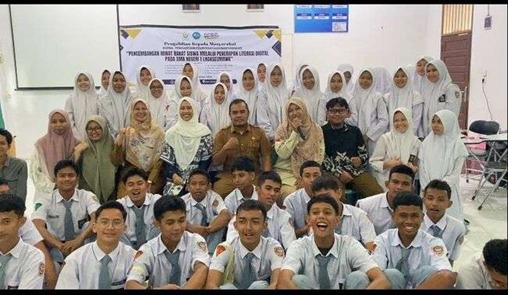
In today's digital era, fostering students' interests and talents is important. This study addresses the challenge of students struggling to identify and develop their potential, hindering their character development and limiting their success in a digitally connected world. This activity aimed to develop a digital platform to optimize student potential by providing personalized recommendations based on established assessment methods: Holland's RIASEC and Multiple Intelligence System (MIS). Conducted at SMAN 1 Lhokseumawe with 50 student participants, the project involved observation, website development, socialization, and ongoing refinement. The developed website provides students with personalized assessments and extracurricular recommendations, while also offering management tools for teachers, school operators, and the principal. Initial surveys revealed that while students were interested in extracurricular activities, many lacked clarity regarding their talents and the alignment of those talents with their chosen activities. It is expected that this digital tool will not only enhance student self-awareness and character development but also contribute to improved student achievement and school branding, ultimately preparing students for success in the evolving digital landscape.
Downloads
References
Aini, S. N., & Pramasdyahsari, A. S. (2023). Pendampingan Simulasi Asesmen Kompetensi Minimum berbasis Literasi Digital untuk Meningkatkan Kemampuan Literasi Numerasi dan Adaptasi Teknologi Siswa Sekolah Dasar. Jurnal Pengabdian Masyarakat Bangsa, 1(6), 573–583. https://doi.org/10.59837/jpmba.v1i6.210
Chotibuddin, M., Zunaih, A. I., Musbikhin, & Nashihin. (2024). Quality Education with Sustainable Development Goals (SDGs) No 4: Knowledge-based. Journal of Ecohumanism, 3(8). https://ecohumanism.co.uk/joe/ecohumanism/article/view/5676
Delov, T., & Yuldoshov, F. (2024). Effectiveness of using information technologies in determining talent requirements. AIP Conference Proceedings, 3147(1), 60005. https://doi.org/10.1063/5.0210417
Dewi, D. A., Hamid, S. I., Annisa, F., Oktafianti, M., & Genika, P. R. (2021). Menumbuhkan Karakter Siswa melalui Pemanfaatan Literasi Digital. Jurnal Basicedu, 5(6), 5249–5257. https://doi.org/10.31004/basicedu.v5i6.1609
Đurišić, M., & Bunijevac, M. (2017). Parental Involvement as a Important Factor for Successful Education. Center for Educational Policy Studies Journal, 7(3), 137–153. https://doi.org/10.26529/cepsj.291
Fajri, F., & Irwan Padli Nasution, M. (2023). Literasi Digital: Peluang Dan Tantangan Dalam Membangun Karakter Peserta Didik Digital Literacy: Opportunities and Challenges in Building Student Character. Intelegensia: Jurnal Pendidikan Islam, 11(01), 34–46.
Febianti, Y. N., Herawan, E., & Safitri, A. L. (2023). Digital Literacy and Student Creativity Through E-Resources on the Quality of Learning in College. Journal of Education Technology, 7(1), 25–33. https://doi.org/10.23887/jet.v7i1.436
Fitriyani, F., & Teguh Nugroho, A. (2022). Literasi Digital Di Era Pembelajaran Abad 21. Literasi Jurnal Pengabdian Masyarakat Dan Inovasi, 2(1), 307–314. https://doi.org/10.58466/literasi.v2i1.1416
Handiyani, M., & Abidin, Y. (2023). Peran Guru dalam Membina Literasi Digital Peserta Didik pada Konsep Pembelajaran Abad 21. Jurnal Elementaria Edukasia, 6(2), 408–414. https://doi.org/10.31949/jee.v6i2.5360
Hidayat, A. Z., Zulaikha, S., & Rochanah, S. (2023). Evaluation of Student Interest and Talent Development Program At YASPORBI 1 Elementary School. International Education Trend Issues, 1(3), 143–152.
Jordan, A., Julianto, A., & Firmansyah, M. A. (2024). Integrating Digital Literacy into Curriculum Design a Framework for 21 st Century Learning. 1(2), 79–85.
Khotimah, N., & Kamila, F. S. (2022). SAIZU INTERNATIONAL CONFERENCE ON TRANSDISCIPLINARY RELIGIOUS STUDIES ( SAIZU ICON-TREES ) Proceeding of 2 nd Internasional Conference on Strengthening Religious Values on Transdisciplinary Studies in Modern Technology Era The Trends of Digital Da ’ wah : Proceeding of 2nd Internasional Conference on Strengthening Religious Values on Transdisciplinary Studies in Modern Technology Era, 1–11.
Mario, A., Mulia, A., Samcha, N. D., & Avia, N. (2024). Mengembangkan Minat dan Bakat melalui Program Asesmen pada Siswa SMP. Junal Studi Multidisipliner, 8(12), 691–695.
Muallimin, E. Z., Fridani, L., & Nurjannah. (2023). Teacher Strategies in Efforts to Improve Digital Literacy Skills of Children Aged 7-8 Years (Case Study on Elementary School Teachers in South Jakarta). EDUTEC: Journal Of Education and Technology, 7(2), 690–704.
Nirzam, M., & Ramadhan, P. (2023). The Role of SDG 4: Quality Education on the Internationalization of Indonesia’s Education. Hasanuddin Journal of Strategic and International Studies (HJSIS), 1(2), 39–51. https://doi.org/10.20956/hjsis.v1i2.27442
Onuorah, L. (2023). Talent Management in The Digital Age: Challenges and Opportunities. Journal of the Managament Sciences, 60(1).
Pramudawardani, N. K. P., & Adiati, R. P. (2024). Holland ’ s RIASEC Model : Career and Job Development Assessment for Personnel Administration Staff Holland ’ s RIASEC Model : Asesmen Pengembangan Karier dan Kerja pada Personnel Administration Staff. 13(3), 361–370.
Putra, I., Siregar, N. I., & Maizana, D. (2024). Exploring Talent And Interests Through The Harapan Foundation And The University Of Medan Area. International Journal of Community Service Implementation, 2(3), 251–258.
Rahmadani, L., Darni, R., & Novaliendry, D. (2025). APPLICATION OF TALENT TEST USING AN EXPERT SYSTEM IN DETERMINING EXTRACURRICULAR ACTIVITIES FOR PUBLIC TSANAWIYAH STUDENTS ( MTSN ) 3 SOUTH COAST USING A FORWARD CHAINING APPROACH. 64–69. https://doi.org/10.24036/int.j.emerg.technol.eng.educ..v1i2.30
Rasmussen, A., & Rasmussen, P. (2015). Conceptions of student talent in the context of talent development. International Journal of Qualitative Studies in Education, 28(4), 476–495. https://doi.org/10.1080/09518398.2014.916013
Sahputra, I., Pratama, A., Fachrurrazi, S., Muthmainnah, M., & Saptari, M. A. (2023). Meningkatkan Semangat Literasi Digital Pada Generasi Millenial Dalam Penangkalan Berita Hoaks. Jurnal Malikussaleh Mengabdi, 2(1), 283. https://doi.org/10.29103/jmm.v2i1.12358
Sánchez-Martín, J., Álvarez-Gragera, G. J., Dávila-Acedo, M. A., & Mellado, V. (2017). What do K-12 students feel when dealing with technology and engineering issues? Gardner’s multiple intelligence theory implications in technology lessons for motivating engineering vocations at Spanish Secondary School. European Journal of Engineering Education, 42(6). https://www.tandfonline.com/doi/full/10.1080/03043797.2017.1292216?scroll=top&needAccess=true
Wiranata, F. E., Putri, I. S., & Christina, M. M. (2024). Pendampingan Asesmen Minat dan Bakat Siswa SMA Imanuel Kalasan dalam Menghadapi Disrupsi Teknologi. Jurnal Atma Inovasia, 4(1), 17–22. https://doi.org/10.24002/jai.v4i1.8339
Yohana, C., Agung, I., Perdana, N. S., & Silisabon, S. (2020). A study of factors influencing the development of student talent. International Journal of Education and Practice, 8(3), 441–456. https://doi.org/10.18488/journal.61.2020.83.441.456
Yulia, R., Henita, N., Gustiawan, R., & Yeni Erita. (2022). Efforts to Strengthen Character Education for Elementary School Students by Utilizing Digital Literacy in Era 4.0. Journal of Digital Learning and Distance Education, 1(6), 240–249. https://doi.org/10.56778/jdlde.v1i6.39
Zakariyah, M. F., Riyanto, Y., Lestari, G. D., & Zawawi, A. A. (2023). Implementation of Digital Literacy in the Development of Extracurricular Programs. Jurnal UNNES, 17(1), 67–76.
Downloads
Published
How to Cite
Issue
Section
License
Copyright (c) 2025 Ersa, et al

This work is licensed under a Creative Commons Attribution-ShareAlike 4.0 International License.