Active participation of mothers in plastic recycling activities to improve water quality and reduce environmental pollution
DOI:
https://doi.org/10.22219/jcse.v6i1.37550Keywords:
Community Service, Ecobrick, Evaluation, Pollution, Clean waterAbstract
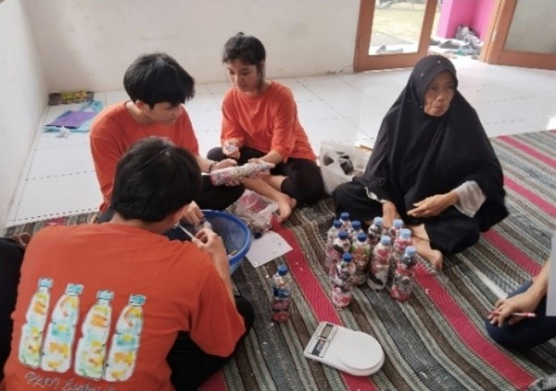
This program investigates active participation of mothers in plastic recycling activities to improve water quality and reduce environmental pollution through the creation of ecobrick. Implemented as a community service program, the initiative followed a structured approach encompassing observation, education, assistance, and evaluation stages. The program aimed not only to minimize plastic waste but also to empower residents with skills and knowledge for sustainable environmental management. Throughout the program, participants showed high levels of enthusiasm and engagement, actively collecting and compacting various types of plastic waste into ecobrick. The program outcomes indicate significant gains in both technical competencies related to ecobrick production and increased environmental awareness among participants, fostering a sense of ecological responsibility and community collaboration. Evaluation results demonstrate the program’s effectiveness in reducing the amount of unmanaged plastic waste and contributing to a cleaner neighborhood environment. This success also supports the broader goal of Sustainable Development Goal (SDG) 6, specifically focusing on clean water and sanitation by addressing pollution sources within the community. The findings underscore the potential of community-led initiatives in achieving sustainable environmental impact, suggesting the scalability of this program model to similar urban and suburban areas facing plastic pollution challenges.
Downloads
References
Aryana, I. W. P. S., Astawa, I. W., Suwandana, I. M. A., Saidi, A. W., & Primadewi, S. P. N. (2023). PKM pendampingan desain kemasan pada RH (Reta Handycrafts) di Banjar Titih Tengah Kota Denpasar. Journal on Education, 5(3), 10626–10633. https://doi.org/10.31004/joe.v5i3.1966
Badan Pengembangan dan Pembinaan Bahasa (Pusat Bahasa). (2024). Proposal. https://kbbi.web.id/proposal
Bermuli, J. E., Ismanto, I., Lucky, E., & Manullang, M. L. (2023). Training on making handicrafts from natural materials and plastic waste for child activists and educators. Journal of Community Service and Empowerment, 4(3), 467–477. https://doi.org/10.22219/jcse.v4i3.27449
Diana, A., Nizar, & Sari, R. (2023). Evaluasi program pendidikan. Jurnal Studi Islam Indonesia (JSII), 1(1), 157–166.
Ernawati, I., & Setiawaty, D. (2021). Efektifitas layanan bimbingan kelompok dengan teknik psikodrama dalam meningkatkan motivasi belajar siswa kelas VIID di SMP Negeri 11 Yogyakarta Tahun Ajaran 2017/2018. G-Couns: Jurnal Bimbingan Dan Konseling, 5(2), 220–225. https://doi.org/10.31316/g.couns.v5i2.1567
Evode, N., Qamar, S. A., Bilal, M., Barceló, D., & Iqbal, H. M. N. (2021). Plastic waste and its management strategies for environmental sustainability. In Case Studies in Chemical and Environmental Engineering (Vol. 4). https://doi.org/10.1016/j.cscee.2021.100142
Fatmawaty, D., Purnaweni, H., & Luqman, Y. (2020). Peran Serta masyarakat dalam menanggulangi kasus pencemaran dan/atau kerusakan lingkungan hidup. Prosiding Seminar Nasional Lahan Suboptimal “Komoditas Sumber Pangan Untuk Meningkatkan Kualitas Kesehatan Di Era Pandemi Covid-19, 978–979.
Hasibuan, R. (2016). Analisis dampak limbah/sampah rumah tangga terhadap pencemaran lingkungan hidup. Justice: Jurnal Ilmiah Advokasi, 4(1), 42–52. https://doi.org/https://doi.org/10.36987/jiad.v4i1.354
Indonesia, L. Sdg. (2025). Sustainable development goals. https://localisesdgs-indonesia.org/17-sdgs
Kewengian, G. P. (2019). Partisipasi masyarakat dalam pengelolaan dan pelestarian lingkungan hidup. Lex Et Societatis, 7(5), 55–62.
Khoiriyati, A., Huriah, T., Hidayati, L. N., & Indarwati, F. (2022). Panduan penelitan UMY.pdf. Universitas Muhammadiyah Yogyakarta.
Lase, M. J., & Nababan, E. B. (2023). Penggunaan rubrik sebagai instrumen penilaian dalam kegiatan menulis teks editorial siswa sekolah menengah atas [The use of rubrics as an assessment instrument in high school students’ editorial text writing activities]. Polyglot: Jurnal Ilmiah, 19(2), 176. https://doi.org/10.19166/pji.v19i2.6279
Maharani, S., & Aryanta, W. R. (2023). Dampak buruk polusi udara bagi kesehatan dan cara meminimalkan risikonya. Jurnal Ecocentrism, 3(2), 47–58. https://doi.org/10.36733/jeco.v3i2.7035
Mahmudi, I. (2018). Rubrik analitik penilaian hasil belajar praktik Pendidikan Agama Islam. Fikrah: Journal of Islamic Education, 2(2), 32–154.
Marco-Fondevila, M., Rueda-Tomás, M., & Latorre-Martínez, M. P. (2022). Active Participation and Interaction, Key Performance Factors of Face-to-Face Learning. Education Sciences, 12(7). https://doi.org/10.3390/educsci12070429
Musarwan; Warsah, I. (2022). Evaluasi Pembelajaran (Konsep. Fungsi dan Tujuan). Jurnal Kajian Pendidikan Islam, 1(2), 186–199.
Nugroho, S. H. S. (2022). … Komparasi Proses Pengambilan Keputusan Berwisata Antara Generasi X Dan Generasi Z (Studi Pada Wisatawan Yang Berkunjung [Universitas Katolik Soegijapranata Semarang]. http://repository.unika.ac.id/id/eprint/29470
Pasalina, P. E., Ihsan, H. F., Nurazlin, N., Tiamida, D., & Sasbia, A. Y. (2023). Upaya perlindungan dan pemenuhan hak kesehatan reproduksi penyandang disabilitas melalui edukasi kesehatan reproduksi di SLB Perwari Padang. Jurnal Abdimas Kesehatan, V(1), 179–185. https://doi.org/10.36565/jak.v5i1.498
Purwaningrum, P. (2016). Upaya mengurangi timbunan sampah plastik. Indonesian Journal of Urban and Environmental Technology, VIII(2), 141–147. https://doi.org/10.25105/urbanenvirotech.v8i2.1421
Putra, H. P., & Yuriandala, Y. (2010). Studi pemanfaatan sampah plastik menjadi produk dan jasa kreatif. Jurnal Sains &Teknologi Lingkungan, 2(1), 21–31. https://doi.org/10.20885/jstl.vol2.iss1.art3
Rafi, P., & Perkasa, M. N. (2023). Dampak kerusakan terhadap lingkungan yang disebabkan oleh sampah plastik berdasarkan tinjauan UU No. 18 Tahun 2008. JMI: Jurnal Multidisiplin Indonesia, 2(7), 1420–1425. https://doi.org/https://doi.org/10.58344/jmi.v2i7.299
Ramadani, A. H. (2019). Analisis vegetasi. In K. ’Aini (Ed.), Panduan biology camp (pp. 106–113). Yayasan Generasi Biologi Indonesia.
Razza, F., Kujanpaa, M., Hamilton, Y., & Kabe, O. (2020). Single-use plastic bags and their alternatives. Life Cycle Initiative. https://www.lifecycleinitiative.org/wp-content/uploads/2020/04/Single-use-plastic-bags-and-alternatives-Recommendations-from-LCA-final.pdf
Rusdiono, Zhan, F. F., Jalius, A. A., & Shadrina, D. N. (2023). Community-Based waste management: Pengelolaan sampah plastik kepada masyarakat Desa Punggur Kecil Kabupaten Kubu Raya. DEDIKASI PKM: Jurnal Pengabdian Kepada Masyarakat, 4(3), 505–514. https://doi.org/10.32493/dedikasipkm.v4i3
Setyowati, V. A., & Widodo, E. W. R. (2017). Studi sifat fisis, kimia, dan morfologi pada kemasan makanan berbahan styrofoam dan LDPE (Low Density Polyethylene): Telaah Kepustakaan. Jurnal Mechanical, VIII(1), 39–45. https://doi.org/10.23960/mech.v8.i1.201706
Sine, J. S., Lak’apu, M., Tandjung, F. L., Baun, N., Koroh, T. D., Oematan, T. O., Adu, M., & Sapai, M. (2023). Pelatihan dan pendampingan pembuatan bahan ajar bagi guru di Kabupaten Sumba Timur. SAMBARA: Jurnal Pengabdian Kepada Masyarakat, 1(2), 61–67. https://doi.org/10.58540/sambarapkm.v1i2.189
St. Onge, J., & Eitel, K. (2017). Increasing active participation and engagement of students in circle formations. Networks: An Online Journal for Teacher Research, 19(1). https://doi.org/10.4148/2470-6353.1014
Suidarma, I. M., & Antini, N. L. A. S. (2023). Penerapan ecobrick sebagai solusi dalam mengurangi jumlah sampah plastik di Desa Pemogan. JPPM (Jurnal Pengabdian Dan Pemberdayaan Masyarakat), VII(1), 157–163. https://doi.org/10.30595/jppm.v7i1.9918
Tangkin, W. P. (2019). Pemanfaatan rubrik sebagai instrumen penilaian alternatif. Scholaria: Jurnal Pendidikan Dan Kebudayaan, 9(1), 29–39. https://doi.org/10.24246/j.js.2019.v9.i1.p29-39
Widayat, W., Praharjo, A., Putri, V. P., Andharini, S. N., & Masudin, I. (2022). Responsible consumer behavior: Driving factors of pro‐environmental behavior toward post‐consumption plastic packaging. Sustainability (Switzerland), 14(1). https://doi.org/10.3390/su14010425
Downloads
Published
How to Cite
Issue
Section
License
Copyright (c) 2025 Jessica Elfani Bermuli, Kurnia Putri Sepdikasari Dirgantoro, Year Rezeki Patricia Tantu, Henni Sitompul, Pingkan Imelda Wuisan, Figlio Guardino Loho, Grace Niche Agnesa Silaban

This work is licensed under a Creative Commons Attribution-ShareAlike 4.0 International License.