Enhancing Academic Writing Skills and Ethical Awareness among Sociology Department Students at Halu Oleo University through Reference Management Training
DOI:
https://doi.org/10.22219/jcse.v6i1.38762Keywords:
Mendeley Training, Academic Ethics, Plagiarism Prevention, Reference Management SkillAbstract
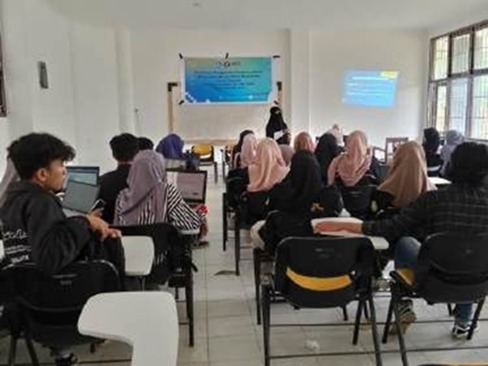
The study aimed to assess the effectiveness of Mendeley training in improving reference management skills and academic ethics among students in the Sociology Department at Halu Oleo University. Specifically, the research focused on evaluating the impact of the training on students' ability to manage references efficiently and their understanding of academic ethics, particularly in avoiding plagiarism and adhering to proper citation practices. This outreach program involved 50 students, primarily final-year students preparing their theses and research reports. The training program, conducted from November 4 to December 4, 2024, included practical sessions on using Mendeley for reference management, alongside discussions on academic ethics, such as plagiarism prevention and proper citation practices. Data was collected through pre-test and post-test questionnaires, as well as observational analysis during hands-on sessions. The primary outcomes measured were students' understanding of Mendeley, reference management skills, and academic ethics before and after the training. Results showed significant improvements in all areas, with the percentage of students demonstrating a strong understanding of Mendeley, increasing from 30% to 85%, reference management skills from 25% to 80%, and academic ethics awareness from 40% to 85%. The findings underscore the effectiveness of practical, interactive training in enhancing both technical skills and ethical awareness, which can lead to higher-quality academic work. The study highlights the importance of integrating reference management training and academic ethics into community engagement initiatives, with the potential to improve the overall academic integrity of students’ scholarly work.
Downloads
References
Ahmad, H., & Fauzi, M. A. (2024). Plagiarism in Academic Writing in Higher Education Institutions: A Bibliometric Analysis. International Journal on Social and Education Sciences, 6(1), 64–84. https://doi.org/10.46328/ijonses.623
Aljuaid, H. (2024). The Impact of Artificial Intelligence Tools on Academic Writing Instruction in Higher Education: A Systematic Review. Arab World English Journal, 1(1), 26–55. https://doi.org/10.24093/awej/ChatGPT.2
Anuradha, D. P. (2023). THE PLAGIARISM CHECKER USING MACHINE LEARNING. INTERANTIONAL JOURNAL OF SCIENTIFIC RESEARCH IN ENGINEERING AND MANAGEMENT, 07(04). https://doi.org/10.55041/IJSREM18949
Ariyanti, A., & Fitriana, R. (2019). EFL Students Perception on Mendeley Reference Manager in Thesis Writing. Proceedings of the Proceedings of the 1st International Conference on Business, Law And Pedagogy, ICBLP 2019, 13-15 February 2019, Sidoarjo, Indonesia. https://doi.org/10.4108/eai.16-10-2019.163223
Ayuni, R., & Meirani, M. (2022). Training on The Utilization of Mendeley and Similarity in Increasing The Quality of Students’ Academic Work. Room of Civil Society Development, 1(1), 34–38. https://doi.org/10.59110/rcsd.v1i1.4
Azizah, U. A., & Budiman, A. (2022). Challenges in Writing Academic Papers for International Publication Among Indonesian Graduates Students. JEELS (Journal of English Education and Linguistics Studies), 4(2), 175–197. https://doi.org/10.30762/jeels.v4i2.405
Basri, M., & Patak, A. A. (2015). Exploring Indonesian students’ perception on Mendeley Reference Management Software in academic writing. 2015 2nd International Conference on Information Technology, Computer, and Electrical Engineering (ICITACEE), 8–13. https://doi.org/10.1109/ICITACEE.2015.7437761
Cahnia, Z. A. (2021). Pemanfaatan Mendeley Sebagai Manajemen Referensi pada Penulisan Skripsi Mahasiswa Program Studi Perpustakaan dan Sains Informasi Universitas Bengkulu. Palimpsest: Jurnal Ilmu Informasi Dan Perpustakaan, 12(1), 48–54. https://doi.org/10.20473/pjil.v12i1.26471
Curran, M. (2011). Mendeley http://www.mendeley.com. Technical Services Quarterly, 28(4), 454–456. https://doi.org/10.1080/07317131.2011.598069
Fajrianti, F., & Kaif, S. H. (2023). Pelatihan Penggunaan Mendeley Reference Dalam Penulisan Karya Ilmiah. Lamahu: Jurnal Pengabdian Masyarakat Terintegrasi, 2(2), 123–128. https://doi.org/10.34312/ljpmt.v2i2.20590
Foltýnek, T., Dlabolová, D., Anohina-Naumeca, A., Razı, S., Kravjar, J., Kamzola, L., Guerrero-Dib, J., Çelik, Ö., & Weber-Wulff, D. (2020). Testing of support tools for plagiarism detection. International Journal of Educational Technology in Higher Education, 17(1), 46. https://doi.org/10.1186/s41239-020-00192-4
Hafizd, J. Z., Rana, M., & Alfaris, D. (2024). Pentingnya Mendeley dalam Meningkatkan Efisiensi Pengelolaan Literatur dan Referensi pada Mahasiswa Fakultas Syariah UIN Siber Syekh Nurjati Cirebon. Jurnal Pendidikan Impola, 1(2), 98–107. https://doi.org/10.70047/jpi.v1i2.142
Helmi, D., Asep, A., & Ansiska, P. (2022). PENINGKATAN KUALITAS KARYA TULIS ILMIAH MAHASISWA MELALUI PELATIHAN MANAJEMEN REFERENSI BERBASIS MENDELEY. PAKEM : Jurnal Pengabdian Kepada Masyarakat, 2(2), 132–137. https://doi.org/10.30598/pakem.2.2.132-137
Hicks, A., & Sinkinson, C. (2015). Examining Mendeley: Designing Learning Opportunities for Digital Scholarship. Portal: Libraries and the Academy, 15(3), 531–549. https://doi.org/10.1353/pla.2015.0035
Houghton, P. M., & Houghton, T. J. (2019). Avoiding Plagiarism: The Easy Way! (Writing with Honesty and Integrity). XanEdu Publishing Inc.
Iskandar, -, & Patak, A. A. (2019). The significance of Mendeley usage on the accuracy of citation and references. International Journal of Humanities and Innovation (IJHI), 2(4), 108–114. https://doi.org/10.33750/ijhi.v2i4.51
Jeng, W., He, D., & Jiang, J. (2015). User participation in an academic social networking service: A survey of open group users on M endeley. Journal of the Association for Information Science and Technology, 66(5), 890–904. https://doi.org/10.1002/asi.23225
Meridha, J. M. (2024). The causes of poor digital literacy in educational practice, and possible solutions among the stakeholders: a systematic literature review. SN Social Sciences, 4(11), 210. https://doi.org/10.1007/s43545-024-01010-8
Muksin, A., & Hasanah, S. (2023). Kajian Yuridis Tahapan Pemilihan Kepala Daerah Serentak Tahun 2024. Politea : Jurnal Politik Islam, 6(2), 67–83. https://doi.org/10.20414/politea.v6i2.8524
Nguyen, H. L., Nguyen, T. L., Pham, T. Q., & Le, D. H. (2024). Perceptions of Postgraduates Towards Using Citation Management Software in Academic Writing: A Case Study in a Vietnamese University. Proceedings of the AsiaCALL International Conference, 6, 35–53. https://doi.org/10.54855/paic.2463
Nikmah, D. N. (2019). Hubungan Sikap Ilmiah , Kebebasan Akademik , dan Etika. Jurnal Kajian Teori Dan Praktik Kependidikan, 4(1), 29–44. http://journal2.um.ac.id/index.php/jktpk
Oo, C. Z., Alonzo, D., Asih, R., Pelobillo, G., Lim, R., San, N. M. H., & O’Neill, S. (2024). Implementing school-based assessment reforms to enhance student learning: a systematic review. Educational Assessment, Evaluation and Accountability, 36(1), 7–30. https://doi.org/10.1007/s11092-023-09420-7
Paas, F., Renkl, A., & Sweller, J. (2003). Cognitive Load Theory and Instructional Design: Recent Developments. Educational Psychologist, 38(1), 1–4. https://doi.org/10.1207/S15326985EP3801_1
Pecorari, D. (2003). Good and original: Plagiarism and patchwriting in academic second-language writing. Journal of Second Language Writing, 12(4), 317–345. https://doi.org/10.1016/j.jslw.2003.08.004
Pratama, B. I., Pratama, M. R., & Sekti Ari, D. P. (2023). Mendeley untuk Semua: Sosialisasi Penggunaan Mendeley untuk Penulisan Akademik dan Non Akademik. Jurnal Pengabdian Masyarakat (ABDIRA), 3(3), 43–52. https://doi.org/10.31004/abdira.v3i3.347
Raharjo, U. D., Rosyad, Y. S., Monika, R., & Khoeriyah, S. M. (2022). Evaluation of the Mendeley Utilization Training for Academic Writing through Usability Approach. Pengabdian Masyarakat Cendekia (PMC), 1(1), 5–8. https://doi.org/10.55426/pmc.v1i1.175
Sekarini, R. A., Sukamto, B., Siregar, A. M., Dirgantara, M. A., & Perdana, N. A. (2024). Pelatihan Aplikasi Mendeley Dalam Penggelolaan Dan Referensi Tugas Akhir Mahasiswa. Jurdimas (Jurnal Pengabdian Kepada Masyarakat) Royal, 7(3), 352–358. https://doi.org/10.33330/jurdimas.v7i3.3092
Silvia, P. J. (2019). How to write a lot: A practical guide to productive academic writing (2nd ed.). American Psychological Association. https://doi.org/10.1037/0000109-000
Stratton, S. J. (2019). Quasi-Experimental Design (Pre-Test and Post-Test Studies) in Prehospital and Disaster Research. Prehospital and Disaster Medicine, 34(6), 573–574. https://doi.org/10.1017/S1049023X19005053
Swales, J., & Feak, C. (2012). Academic Writing for Graduate Students, 3rd Edition. University of Michigan Press/ELT. https://doi.org/10.3998/mpub.2173936
Syaharuddin, S., Mandailina, V., Pramita, D., Rahmaniah, R., Rosada, R., & Negara, H. R. P. (2021). PENINGKATAN KUALITAS PUBLIKASI MAHASISWA DAN SITASI KARYA ILMIAH DOSEN MELALUI WORKSHOP MANAGEMEN SOFTWARE MENDELEY. Community Development Journal : Jurnal Pengabdian Masyarakat, 2(1), 8–13. https://doi.org/10.31004/cdj.v2i1.1367
Vijai, C., Natarajan, K., & Elayaraja, M. (2019). Citation Tools and Reference Management Software for Academic Writing. SSRN Electronic Journal. https://doi.org/10.2139/ssrn.3514498
Williams, L., & Woods, L. (2024). Reference management practices of students, researchers, and academic staff. The Journal of Academic Librarianship, 50(3), 102879. https://doi.org/10.1016/j.acalib.2024.102879
Williams, M. S., & Hosek, W. R. (2003). STRATEGIES FOR REDUCING ACADEMIC DISHONESTY. Journal of Legal Studies Education, 21(1), 87–107. https://doi.org/10.1111/j.1744-1722.2003.tb00326.x
Downloads
Published
How to Cite
Issue
Section
License
Copyright (c) 2025 Soulthoni et al

This work is licensed under a Creative Commons Attribution-ShareAlike 4.0 International License.