Flipped learning's impact on junior high students' critical thinking in ecology topic
English
DOI:
https://doi.org/10.22219/raden.v4i2.35438Keywords:
critical thinking skills, ecological awareness, innovative teaching methodsAbstract
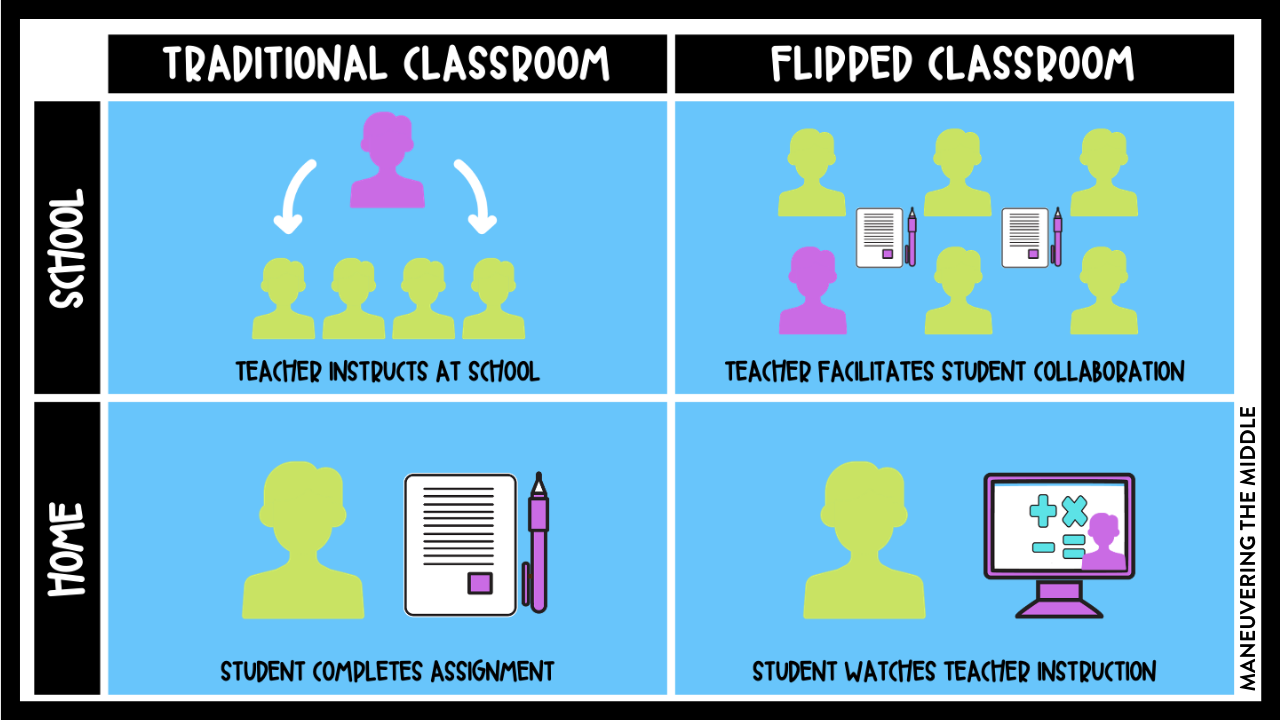
Environmental issues have become a major global focus, with various stakeholders including practitioners, media, governments, and academics expressing concerns about ongoing environmental changes. To address these challenges, there is a need to enhance students' critical thinking skills to analyze ecological problems, equipping the next generation to understand and respond effectively. This study investigates the impact of the flipped learning model on middle school students' critical thinking skills in ecology topic. A quasi-experimental design was used, specifically a pretest-posttest nonequivalent control group design. Conducted at SMPN 216 Jakarta from January to June 2024, the research involved a sample of 72 students. Results analyzed with the non-parametric Mann-Whitney U test on gain scores indicate that the flipped learning model positively influences students' critical thinking skills in environmental issues, with an N-gain score of 0.49, categorized as medium. Therefore, this form of learning can be an effective alternative in improving students' critical thinking skills.
Downloads
References
Aji, G. P., & Nugraheni, B. I. (2023). Critical thinking skills of high school and vocational school students in indonesia: a literature review. International Journal of Education and Social Science Research, 06(03), 353–367. https://doi.org/10.37500/IJESSR.2023.6328
Atmojo, I. R. W., Ardiansyah, R., Adi, F. P., Chumdari, C., Saputri, D. Y., & Wahyuningtyas, M. (2023). The relationship between self-regulated learning and students’ critical thinking skills. Mimbar Sekolah Dasar, 10(3), 513–526. https://doi.org/10.53400/mimbar-sd.v10i3.61151
Aulia, S. A. (2024). Air pollution threatens health and climate change in Jakarta. Human Error and Safety, 1(1), 36–46. https://doi.org/10.61511/hes.v1i1.2024.648
Burce, A. D., & Callo, E. C. C. (2024). Flipped classroom strategy in promoting critical thinking in social science. World Journal of Advanced Research and Reviews, 22(2), 2111–2137. https://doi.org/10.30574/wjarr.2024.22.2.1638
Burke, A., Boison, B., Knopp, M., & Lawlor, A. (2024). Redesigning an environmental curriculum for student engagement. Connected Science Learning, 6(1), 33–41. https://doi.org/10.1080/24758779.2023.2300499
Chankvetadze, A. (2024). Flipped classroom: Rising motivation of new generation or challengeable way of studying on higher education level (case study in Georgia). Proceedings of the International Conference on Innovative Research in Education, 1(1), 21–31. https://doi.org/10.33422/ireconf.v1i1.442
Chukwuma, C. (2022). Global concerns and affairs in environment and health. International Journal on Infectious Disease and Epidemiology, 3(4). https://doi.org/10.51626/ijide.2022.03.00029
Ding, Y. (2023). Assessing human influence on ecological dynamics: a study of anthropogenic ecology and impact measurement. https://doi.org/10.20944/preprints202304.0008.v1
Fauzi, A. (2019). Profile of junior high school students’ critical thinking skills in answering questions related to biological concepts. Scientiae Educatia: Jurnal Pendidikan Sains, 8(1), 51–63. https://doi.org/10.24235/sc.educatia.v8i1.4081
Haque, S., & Islam, M. A. (2015). Stakeholder pressures on corporate climate change-related accountability and disclosures: Australian evidence. Business and Politics. https://doi.org/10.1515/bap-2014-0017
Hove, G., Rathaha, T., & Mugiya, P. (2020). The impact of human activities on the environment, case of Mhondongori in Zvishavane, Zimbabwe. Journal of Geoscience and Environment Protection, 08(10), 330–349. https://doi.org/10.4236/gep.2020.810021
Idris, S. H., Puteri, D. S., Wahono, D. C., Firdaus, R. J., & Pratomo, N. B. A. (2024). Indonesia paradox on plastic waste import in international policy and social movement perspective. Indonesian Journal of Advocacy and Legal Services, 6(1), 169–204. https://doi.org/10.15294/ijals.v6i1.78522
Kareiva, P., & Kareiva, I. (2024). Concept and theories in ecology. In Encyclopedia of Biodiversity (pp. 63–71). Elsevier. https://doi.org/10.1016/B978-0-12-822562-2.00159-6
Kumaresan, P. R., Hidangmayum, N., Singh, A., Yadav, D., Shabnam, S., Brajendra, B., Devi, A. B., & Asmatullah. (2023). A comprehensive report on environmental sustainability: A global perspective. International Journal of Environment and Climate Change, 13(11), 1310–1316. https://doi.org/10.9734/ijecc/2023/v13i113283
Lai, E. K. (2024). Knowledge acquisition and retention in a flipped nursing course: A quasi experimental study. Journal of Nursing Education, 63(8), 501–506. https://doi.org/10.3928/01484834-20240404-03
Lampert, A. (2019). Over-exploitation of natural resources is followed by inevitable declines in economic growth and discount rate. Nature Communications, 10(1), 1419. https://doi.org/10.1038/s41467-019-09246-2
Moiseeva, E., & Anisimova, U. (2024). Environmental education of primary school children is the key to the future of the planet. Materials of the International Scientific and Practical Conference, Dedicated to World Environment Day «SYNTHESIS OF SCIENCE AND EDUCATION IN SOLVING THE ENVIRONMENTAL PROBLEMS OF MODERNITY – 2024», 182–185. https://doi.org/10.58168/SYNTHESIS2024_182-185
Mook, A., & Swanson, E. (2024). Environmental change. In The Blackwell Encyclopedia of Sociology (pp. 1–6). Wiley. https://doi.org/10.1002/9781405165518.wbeose104.pub2
Munawarah, L., Soendjoto, M. A., & Halang, B. (2018). Critical thinking ability of biology education students through environmental toxicology’s problem solving. EDUSAINS, 10(1). https://doi.org/10.15408/es.v10i1.6656
Musah, E., & Wangila, C. (2024). Inquiry-based ethnoecological conservation approach to improve students’ critical thinking skills. International Journal of Ethnoscience and Technology in Education, 1(2), 97. https://doi.org/10.33394/ijete.v1i2.11240
Mushtaq, D. M., & Iqbal, Z. (2024). Hybrid pedagogies: Assessing the effectiveness of blended and flipped learning in digital learning environments. International Journal of Emerging Knowledge Studies, 03(09), 662–669. https://doi.org/10.70333/ijeks-03-09-034
Mustadi, A., Ghufron, A., & Fakhrudin, A. (2024). Promoting students’ critical thinking and creativity through TPACK based flipped classroom learning model in higher education. Edelweiss Applied Science and Technology, 8(5), 1249–1259. https://doi.org/10.55214/25768484.v8i5.1828
Nizaruddin, N., & Kusmaryono, I. (2023). How are critical thinking skills related to students’ self-regulation and independent learning? Pegem Journal of Education and Instruction, 13(4), 85–92. https://doi.org/10.47750/pegegog.13.04.10
Ojong, L. O. (2022). The effects of man’s activities on the environment and humanity: The way forward. Bangladesh Journal of Bioethics, 13(1), 48–54. https://doi.org/10.62865/bjbio.v13i1.32
Pan, N. (2024). Exploring the impact of teacher role changes in the flipped classroom model on the critical thinking abilities of university students. Research and Advances in Education, 3(3), 33–39. https://doi.org/10.56397/RAE.2024.03.06
Parker, D., Tosiani, A., Yazid, M., Sari, I. L., Kartika, T., Kustiyo, Firmansyah, R., Said, Z., Wijaya, A., Potapov, P., Tyukavina, A., Stehman, S. V., Zalles, V., Pickens, A., Pickering, J., Turubanova, S., & Hansen, M. C. (2024). Land in limbo: Nearly one third of Indonesia’s cleared old-growth forests left idle. Proceedings of the National Academy of Sciences, 121(28). https://doi.org/10.1073/pnas.2318029121
Prasad, N. K., & Shachi, K. (2023). Ecological principles. B P International (a part of SCIENCEDOMAIN International). https://doi.org/10.9734/bpi/mono/978-81-19217-43-4
Priska, C. A., & Yokhebed, Y. (2024). Problem based learning to improve students’ problem solving skills on environmental change material. Journal of Biology Learning, 6(1), 1–6. https://doi.org/10.32585/jbl.v6i1.4593
Putri, N. T., A, I., & Subchan, W. (2022). Development of a problem based learning model based on socio scientific issues to improve student critical thinking skills on materials for environmental change and conservationin senior high school. International Journal of Advanced Research, 10(06), 856–860. https://doi.org/10.21474/IJAR01/14961
Rahmatika, N., Hanapi, M. H. bin M., Jendriadi, J., Sariasih, Y., Imami, M. K. W., & Uslan, U. (2024). The impact of flipped learning on students` critical thinking; A systematic literature review. International Journal of Learning, Teaching and Educational Research, 23(10), 180–206. https://doi.org/10.26803/ijlter.23.10.9
Reckermann, M. (2023). Human impacts and their interactions in the Baltic Sea region. https://doi.org/10.5194/egusphere-egu23-2776
Setiyawan, A. A., Agoestanto, A., & Isnarto, I. (2024). Enhancing self-regulated learning and critical thinking in STEM through flipped classroom models. Jurnal Elemen, 10(2), 341–362. https://doi.org/10.29408/jel.v10i2.25322
Singh, V. (2024). The natural resources: Introduction. In Textbook of Environment and Ecology (pp. 97–105). Springer Nature Singapore. https://doi.org/10.1007/978-981-99-8846-4_6
Sousa, D. B., Mecheln, L. H. M. Von, Ferrazoli, S. R., Malta, D. P. de L. N., Dos Santos, A. M. V. G., & De Souza, G. A. N. A. (2024). Sala de aula invertida: aprendizagem ativa em ação - transformando o processo de ensino-aprendizagem na era digital. ARACÊ, 6(3), 5381–5395. https://doi.org/10.56238/arev6n3-067
Stevenson, R. B., Wals, A. E. J., Heimlich, J. E., & Field, E. (2017). Critical environmental education. In A. Russ & M. E. Krasny (Eds.), Urban Environmental Education Review. Cornell University Press. https://doi.org/10.7591/cornell/9781501705823.003.0006
Sugrah, N., Suyanta, S., & Wiyarsi, A. (2023). Promoting students’ critical thinking and scientific attitudes through socio-scientific issues-based flipped classroom. LUMAT: International Journal on Math, Science and Technology Education, 11(1). https://doi.org/10.31129/LUMAT.11.1.1856
Supriyadi, S., Djou, D. N., & Muslimin, M. (2024). Flipped classroom method to build students’ critical thinking skills: A study on the indonesia language and literature research methodology course. Evolutionary Studies in Imaginative Culture, 1323–1337. https://doi.org/10.70082/esiculture.vi.1380
Tiwari, G. N. (2024). Ecology. In Energy, Ecology and Environment (pp. 143–173). Springer Nature Singapore. https://doi.org/10.1007/978-981-99-3997-8_6
Uddin, M. R., Shimizu, K., & Widiyatmoko, A. (2020). Assessing secondary level students’ critical thinking skills: inspiring environmental education for achieving sustainable development goals. Journal of Physics: Conference Series, 1567(2), 022043. https://doi.org/10.1088/1742-6596/1567/2/022043
Wang, J., & Azam, W. (2024). Natural resource scarcity, fossil fuel energy consumption, and total greenhouse gas emissions in top emitting countries. Geoscience Frontiers, 15(2), 101757. https://doi.org/10.1016/j.gsf.2023.101757
Wismadi, A. (2019). Management of changes for livable environment. MATEC Web of Conferences, 280, 06001. https://doi.org/10.1051/matecconf/201928006001
Downloads
Published
How to Cite
Issue
Section
License
Copyright (c) 2024 Diana Vivanti Sigit, Chesia Saranata Simanullang, Daniar Setyo Rini

This work is licensed under a Creative Commons Attribution-ShareAlike 4.0 International License.
Authors who publish with Research and Development in Education agree to the following terms:
- For all articles published in the Research and Development in Education, copyright is retained by the authors. Authors give permission to the publisher to announce the work with conditions. When the manuscript is accepted for publication, the authors agree to the automatic transfer of non-exclusive publishing rights to the publisher.
- Authors retain copyright and grant the journal right of first publication with the work simultaneously licensed under a Creative Commons Attribution-ShareAlike 4.0 International License that allows others to share the work with an acknowledgment of the work's authorship and initial publication in this journal.
- Authors are able to enter into separate, additional contractual arrangements for the non-exclusive distribution of the journal's published version of the work (e.g., post it to an institutional repository or publish it in a book), with an acknowledgment of its initial publication in this journal.
- Authors are permitted and encouraged to post their work online (e.g., in institutional repositories or on their website) prior to and during the submission process, as it can lead to productive exchanges, as well as earlier and greater citation of published work (See The Effect of Open Access).

This work is licensed under a Creative Commons Attribution-ShareAlike 4.0 International License.