Implementing of science literacy guidelines for primary school teacher students
DOI:
https://doi.org/10.22219/raden.v4i2.35892Keywords:
critical thinking skills, primary school teacher students, science literacyAbstract
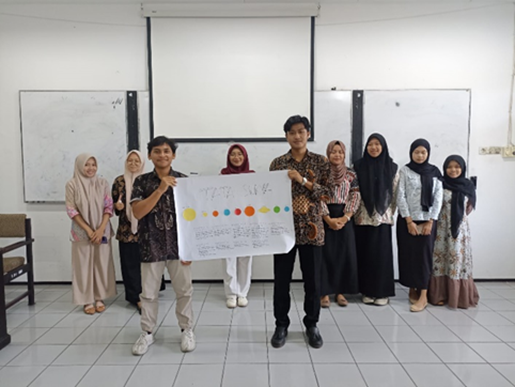
Science literacy is an individual's ability to understand, use, and communicate concepts and critical-thinking in a scientific context. Primary school teacher students plays an important role in shaping strong understanding and effective on science literacy skills among elementary school students. This research employs a qualitative descriptive approach. It utilizes both qualitative and quantitative data. The study focuses on the process of data collection and supporting elements of the research obyek. Data collection techniques in this research include in-depth interviews, observation, and document analysis. The results of this study are a description of the implementation of the implementation of science literacy guidelines that have been effective in helping students understand the material, especially the solar system. The science literacy guide has undergone several revisions and has subsequently made it to the ISBN submission stage. In addition, learning objectives have also been maximally achieved with various activities during the implementation of science literacy books. It can be seen from the results of student work on the students’ worsheet, each group has answered the questions correctly. In addition, the posters that have been made show that the posters are appropriate according to the material that has been studied related to the solar system. While the essays have also been in accordance with the reading material. The implementation of science literacy guidelines can assist the students in acquiring their knowledge, skills, and strategies needes to effectively teach science in elementary schools.
Downloads
References
Amanda, F. F., Sumitro, S. B., & Lestari, S. R. (2021). Analysis of the relationship between concept mastery and problem-solving skills of pre-service biology teachers in human physiology courses. Indonesian Journal of Science Education, 9(3), 421–432. https://doi.org/10.24815/ jpsi.v9i3.19956
Andini, S., Budiyono, & Fitriana, L. (2018). Developing flipbook multimedia: The achievement of informal deductive thinking level. Journal on Mathematics Education, 9(2), 227–238. https:// doi.org/10.22342/jme.9.2.5396.227-238
Arends, R. I. (2012). Learning to teach. In Learning to teach (Ninth, Vol. 6, Issue 1). https:// www.academia.edu/34403357/_Richard_Arends_Learning_to_Teach_BookFi_org_
Astuti, A. P., Mawarsari, V. D., Purnomo, H., & Sediyono, E. (2020). The use of augmented reality-based learning media to develop the technology literacy of chemistry teachers in the 21st century. AIP Conference Proceedings, 2215(April). https://doi.org/10.1063/5.0000745
Bogdan, R. C., & Biklen, S. K. (1998). Qualitative research for education: An introduction to theory and methods. Allyn and Bacon. https://math.buffalostate.edu/dwilson/MED595/Qualitative_ intro.pdf
Bybee, R. W. (2008). Scientific literacy, environmental issues, and PISA 2006: The 2008 paul F-Brandwein lecture. Journal of Science Education and Technology, 17(6), 566–585. https://doi. org/10.1007/s10956-008-9124-4
Cahyana, U., Kadir, A., & Gherardini, M. (2017). Relasi kemampuan berpikir kritis dalam kemampuan literasi sains pada siswa kelas IV sekolah dasar. Sekolah Dasar: Kajian Teori dan Praktik Pendidikan, 26(1), 14–22. https://doi.org/10.17977/um009v26i12017p014
Celi, C. A., Harjono, H., Haryani, H., & Murbangun, N. (2021). Correlation of perception of metacognitive ability and critical thinking abilities high school students in the Covid-19 pandemic. Phenomenon: Jurnal Pendidikan MIPA, 11(2), 245–259. https://doi.org/10.21580/ phen.2021.11.2.6380
Chiou, G. L., Liang, J. C., & Tsai, C. C. (2012). Undergraduate students’ conceptions of and approaches to learning in biology: A study of their structural models and gender differences. International Journal of Science Education, 34(2), 167–195. https://doi.org/10.1080/09500693. 2011.558131
Cole, L. B. (2019). Green building literacy: A framework for advancing green building education. International Journal of STEM Education, 6(1). https://doi.org/10.1186/s40594-019-0171-6
Dani, D. (2009). Scientific literacy and purposes for teaching science: A case study of Lebanese private school teachers. International Journal of Environmental and Science Education, 4(3), 289–299. https://files.eric.ed.gov/fulltext/EJ884398.pdf
Denzin, N. K. (2017). Critical qualitative inquiry. Qualitative Inquiry, 23(1), 8–16. https://doi.org/10. 1177/1077800416681864
Fajri, Z. (2020). Pengembangan LKS tematik berbasis contextual teaching and learning (CTL) sub tema anggota keluargaku untuk siswa kelas 1 sekolah dasar. KEGURU: Jurnal Ilmu Pendidikan Dasar, 4(1), 15–21. http://194.59.165.171/index.php/KGU/article/view/244
Febri, A., Sajidan, S., Sarwanto, S., & Harjunowibowo, D. (2020). Guided inquiry lab: Its effect to improve student’s critical thinking on mechanics. Jurnal Ilmiah Pendidikan Fisika Al-Biruni, 9(1), 87–97. https://doi.org/10.24042/jipfalbiruni.v9i1.4630
Glaze, A. L. (2018). Teaching and learning science in the 21st century: Challenging critical assumptions in post-secondary science. Education Sciences, 8(1), 12. https://eric.ed.gov /?id=EJ1174941
Hasanah, Z., Tenri Pada*, A. U., Safrida, S., Artika, W., & Mudatsir, M. (2021). Implementasi model problem based learning dipadu LKPD berbasis STEM untuk meningkatkan keterampilan berpikir kritis pada materi pencemaran lingkungan. Jurnal Pendidikan Sains Indonesia, 9(1), 65–75. https://doi.org/10.24815/jpsi.v9i1.18134
Hernani, H., & Mudzakir, A. (2010). Pengaruh pembelajaran berbasis literasi sains dan teknologi terhadap keterampilan proses sains siswa SMP. Jurnal Pendidikan Matematika dan Sains, 1(15), 29–34. https://journal.uny.ac.id/index.php/jpms/article/view/12195/8687
Howard, J. L., Bureau, J., Guay, F., Chong, J. X. Y., & Ryan, R. M. (2021). Student motivation and associated outcomes: A meta-analysis from self-determination theory. Perspectives on Psychological Science, 16(6), 1300–1323. https://doi.org/10.1177/1745691620966789
Jumriani, J., & Prasetyo, Z. . (2017). Important roles of local potency based science learning to support the 21st Century learning. European Journal of Engineering and Formal Sciences, 1(1), 6. https://doi.org/10.26417/ejef.v1i1.p6-16
Kaya, V. H., & Elster, D. (2018). German students’ environmental literacy in science education based on PISA data. Science Education International, 29(2), 75–87. https://doi.org/10.33828/ sei.v29.i2.2
Kelp, N. C., Mccartney, M., Sarvary, M. A., Shaffer, J. F., & Wolyniak, M. J. (2023). Special series: Scientific literacy developing science literacy in students and society. Journal of Microbiology & Biology Education, 24(2), 1–4. https://doi.org/10.1128/jmbe.00058-23
Kozikoğlu, İ. (2019). Investigating critical thinking in prospective teachers: Metacognitive skills, problem solving skills and academic self-efficacy. Journal of Social Studies Education Research, 10(2), 111–130. https://jsser.org/index.php/jsser/article/view/362
Mabsutsah, N., Hariyadi, S., & Prihatin, J. (2023). The readiness of science teachers to implement differentiated learning and integrated STEM in ecology subject of the “Merdeka” curriculum in junior high school. Bioedukasi, 21(2), 99. https://doi.org/10.19184/bioedu.v21i2.39567
Noprianda, M., Noor, M. F., & Zulfiani, Z. (2016). Keterampilan berpikir kritis siswa model pembelajaran problem-based learning dan sains teknologi masyarakat pada konsep virus. Edusains, 8(2), 182–191. https://doi.org/10.15408/es.v8i2.3892
Novick, L. R., & Catley, K. M. (2016). Fostering 21st-Century evolutionary reasoning: Teaching tree thinking to introductory biology students. CBE Life Sciences Education, 15(4), 1–12. https:// doi.org/10.1187/cbe.15-06-0127
Nuraini, N. (2017). Profil keterampilan berpikir kritis mahasiswa calon guru biologi sebagai upaya mempersiapkan generasi Abad 21. Didaktika Biologi: Jurnal Penelitian Pendidikan Biologi, 1(2), 89–96. https://doi.org/10.32502/dikbio.v1i2.676
Nurdin, N. (2020). Urgensi literasi sains dalam meningkatkan kompetensi Widyaiswara PAI BDK Aceh di era millenial. Jurnal Pendidikan Sains Indonesia, 7(1), 55–63. https://doi.org/ 10.24815/jpsi.v7i1.12476
Odegaard, M., Haug, B., Mork, S., & Sorvik, G. O. (2015). Budding science and literacy: A classroom video study of the challenges and support in an integrated inquiry and literacy teaching model. Procedia - Social and Behavioral Sciences, 167(1877), 274–278. https://doi.org/10. 1016/j.sbspro.2014.12.674
Ogunkola, B. J. (2013). Scientific literacy: Conceptual overview, importance and strategies for improvement. Journal of Educationai and Sociai Research, 3(1), 265–274. https://doi.org/10. 5901/jesr.2013.v3n1p265
Peffer, M. E., Beckler, M. L., Schunn, C., Renken, M., & Revak, A. (2015). Science Classroom Inquiry (SCI) simulations: A novel method to scaffold science learning. PLoS ONE, 10(3), 1–14. https://doi.org/10.1371/journal.pone.0120638
Permanasari, A. (2016). STEM education: Inovasi dalam pembelajaran sains. Prosiding Seminar Nasional Pendidikan Sains, 23-. https://jurnal.fkip.uns.ac.id/index.php/snps/article/view/9810
Puriasih, L. P., & Rati, N. W. (2022). E-LKPD interaktif berbasis problem-solving pada materi skala dan perbandingan kelas V sekolah dasar. Jurnal Pedagogi dan Pembelajaran, 5(2), 267–275. https://doi.org/10.23887/jp2.v5i2.48848
Ramadannisaa, R. F., & Hartina, M. M. (2021). The design of web-based learning using google sites for teaching heat and temperature topic. JPPPF (Jurnal Penelitian dan Pengembangan Pendidikan Fisika), 7(2), 107–114. https://doi.org/10.21009/1.07202
Rofieq, A., Hindun, I., Shultonnah, L., & Miharja, F. J. (2021). Developing textbook based on scientific approach, critical thinking, and science process skills. Journal of Physics: Conference Series, 1839(1). https://doi.org/10.1088/1742-6596/1839/1/012030
Sari, N. Y., & Sinthiya, I. A. P. A. (2022). Strategi penguatan profil pelajar Pancasila di SMA Negeri 2 Gadingrejo. JMPA (Jurnal Manajemen Pendidikan Al-Multazam), 4(2), 50. https://doi.org /10.54892/jmpa.v4i2.141
Siregar, T. R. A., Iskandar, W., & Rokhimawan, M. A. (2020). Literasi sains melalui pendekatan saintifik pada pembelajaran IPA SD/MI di Abad 21. MODELING: Jurnal Program Studi PGMI, 7(September), 243–257. https://jurnal.stitnualhikmah.ac.id/index.php/modeling/article/view /582
Su’udiah, F., Degeng, I. N. S., & Kuswandi, D. (2016). Pengembangan buku teks tematik berbasis kontekstual. Jurnal Pendidikan: Teori, Penelitian, dan Pengembangan, 1(9), 1744–1748. https://doi. org/10.17977/jp.v1i9.6743
Syofyan, H., & Amir, T. L. (2019). Penerapan literasi sains dalam pembelajaran IPA untuk calon guru SD. Jurnal Pendidikan Dasar, 10(2), 35–43. https://doi.org/10.21009/jpd.v10i2.13203
Syofyan, H., & Rachmadtullah, R. (2019). Increasing ecoliteracy on the impact of organic waste management using a problem a problem-solving the model. International Journal of Scientific and Technology Research, 8(9), 1981–1983. https://www.ijstr.org/final-print/sep2019/increasing-ecoliteracy-on-the-impact-of-organic-waste-management-using-a-problem-a-problem-solvi ng-the-model.pdf
Utami, R. T., & Desstya, A. (2021). Analisis cakupan literasi sains dalam buku siswa kelas V tema 4 Karya Ari Subekti di Sekolah Dasar. Jurnal Basicedu, 5(6), 5001–5013. https://doi.org/10.31004 /basicedu.v5i6.1556
Valladares, L. (2021). Scientific literacy and social transformation: Critical perspectives about science participation and emancipation. Science and Education, 30(3). Springer Netherlands. https://doi.org/10.1007/s11191-021-00205-2
Virtič, M. P. (2022). Teaching science & technology: components of scientific literacy and insight into the steps of research. International Journal of Science Education, 44(12), 1916–1931. https:// doi.org/10.1080/09500693.2022.2105414
Yuliana, I., Hermawan, H. D., Prayitno, H. J., Ratih, K., Adhantoro, M. S., Hidayati, H., & Ibrahim, M. H. (2021). Computational thinking lesson in improving digital literacy for rural area children via CS Unplugged. Journal of Physics: Conference Series, 1720(1). https://doi.org/ 10.1088/1742-6596/1720/1/012009
Downloads
Published
How to Cite
Issue
Section
License
Copyright (c) 2024 Ima Wahyu Putri Utami, Arinta Rezty Wijayaningputri, Nor Hazlina Fazlyn

This work is licensed under a Creative Commons Attribution-ShareAlike 4.0 International License.
Authors who publish with Research and Development in Education agree to the following terms:
- For all articles published in the Research and Development in Education, copyright is retained by the authors. Authors give permission to the publisher to announce the work with conditions. When the manuscript is accepted for publication, the authors agree to the automatic transfer of non-exclusive publishing rights to the publisher.
- Authors retain copyright and grant the journal right of first publication with the work simultaneously licensed under a Creative Commons Attribution-ShareAlike 4.0 International License that allows others to share the work with an acknowledgment of the work's authorship and initial publication in this journal.
- Authors are able to enter into separate, additional contractual arrangements for the non-exclusive distribution of the journal's published version of the work (e.g., post it to an institutional repository or publish it in a book), with an acknowledgment of its initial publication in this journal.
- Authors are permitted and encouraged to post their work online (e.g., in institutional repositories or on their website) prior to and during the submission process, as it can lead to productive exchanges, as well as earlier and greater citation of published work (See The Effect of Open Access).

This work is licensed under a Creative Commons Attribution-ShareAlike 4.0 International License.